
# Dog Beds for Chewers UK: How to Choose Safer, More Durable Bedding
Dog beds for chewers UK owners choose should offer practical durability, suitable materials and a comfortable resting surface. If your dog repeatedly tears open cushions or pulls out the filling, choosing the right bedding can be challenging. This guide explains how to compare chew-resistant dog
When comparing dog beds for chewers UK owners can buy, look beyond claims such as “tough” or “indestructible”. The construction, exposed filling, seams, sleeping surface and your dog's behaviour all matter.
At Zarexon, we believe choosing pet essentials should begin with the individual dog's needs. This guide explains how to compare chew-resistant dog beds, which designs may be worth considering, how to reduce bedding-related risks and when chewing needs attention beyond buying a different bed.
Can You Buy a Truly Chew-Proof Dog Bed?
No ordinary dog bed should be assumed to be completely chew-proof. Some products use reinforced fabrics, stronger seams or simpler constructions, but a determined dog may still damage them.
The more useful question is whether a bed is suitable for your dog's behaviour and what could happen if it gets damaged.
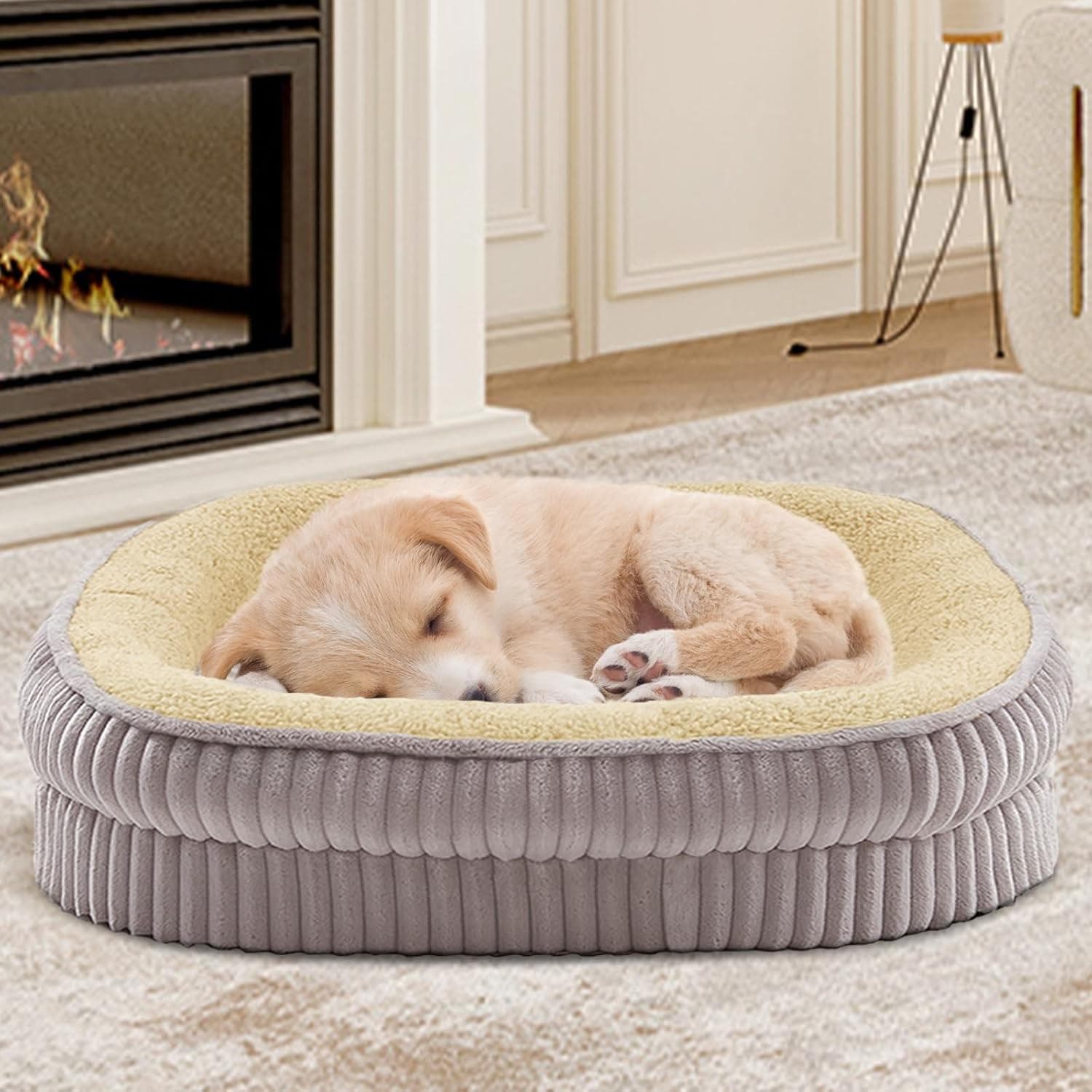
A conventional padded bed may contain foam or fibre filling. If your dog tears the cover, they may be able to pull out and swallow pieces of the filling, fabric or other components. A bed without loose stuffing changes the type of damage that can occur, but it is not automatically safe for every dog.
Before buying a replacement, consider:
- Does your dog chew bedding occasionally or destroy it repeatedly?
- Which parts do they target: corners, seams, zips or the filling?
- Does the chewing happen during play, while resting or when your dog is left alone?
- Can you supervise your dog while introducing new bedding?
- Would a simpler sleeping surface be more suitable?
Quick answer: Choose bedding according to your dog's chewing habits, inspect it regularly and remove it if damage creates a risk of swallowing pieces. No product label can replace supervision and appropriate behaviour management.
Which Type of Dog Bed Is Best for a Chewer?
Different designs have different advantages. The right option depends on your dog's size, sleeping preferences, mobility and the way they damage bedding.
| Bed type | Potential advantages | What to consider |
|---|---|---|
| Stuffing-free mat | No loose cushion filling inside the mat | The dog may still chew and swallow pieces of fabric |
| Raised dog cot | A taut sleeping surface with less exposed padding | Check frame stability, fabric condition and ease of access |
| Hard-sided basket | A wipeable outer shell with a separate sleeping mat | Inspect for cracks, damaged edges and suitable dimensions |
| Reinforced fabric bed | Construction may be designed for greater everyday durability | Reinforced fabric does not guarantee resistance to determined chewing |
| Conventional padded bed | May offer a comfortable surface for dogs that leave bedding intact | Exposed foam or fibre filling can become a concern if damaged |
| Removable-cover mattress | Makes routine cleaning more convenient | A removable cover is not necessarily chew-resistant |
These are general buying considerations, not guarantees that a particular bed will withstand your dog.
1. Stuffing-free dog mats
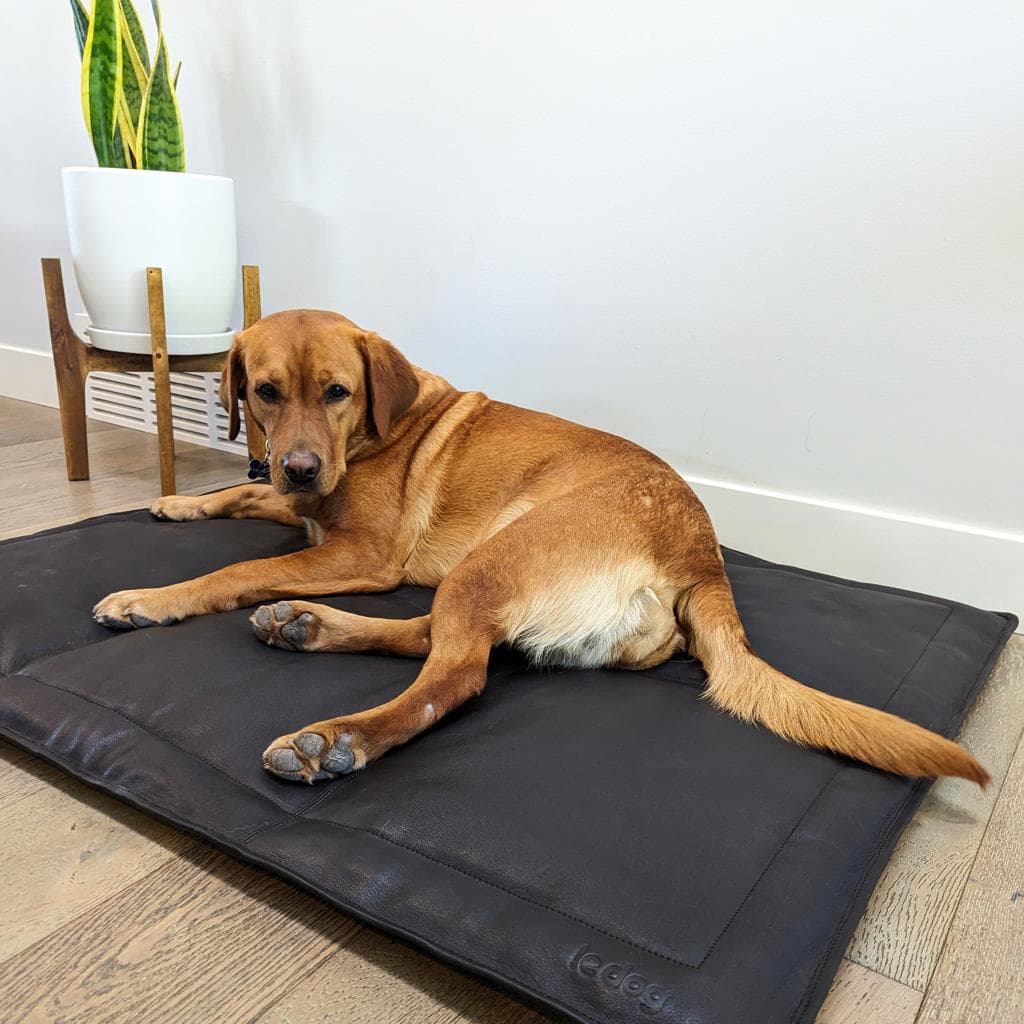
A simple mat without loose internal cushion filling may be worth considering when your dog repeatedly tears open padded beds. It can offer a straightforward resting surface without the same type of loose stuffing found in many cushions.
However, the mat itself can still be chewed. Inspect the edges and surface, and remove it if your dog starts tearing off pieces that could be swallowed.
Check the dimensions and care instructions before buying. The mat should provide enough room for your dog to rest naturally and should be suitable for the intended floor surface.
2. Raised dog beds
Raised dog beds use a frame and a stretched fabric or mesh surface instead of a conventional stuffed mattress. Some designs may offer fewer exposed padded edges for a dog to pull apart.
However, a raised cot is not the right solution for every dog. A dog may still chew the fabric or frame components, and some older dogs or dogs with limited mobility may find getting on and off a raised surface difficult.
Check the frame's stability, the manufacturer's weight guidance and whether the height suits your dog.
3. Hard-sided baskets
A suitable hard-sided basket can provide a wipeable base with a separate mat or blanket. This may make inspection and routine cleaning easier.
The basket must still be appropriate for your dog's size and behaviour. Check for cracks, sharp or damaged edges and any parts your dog could bite off. The bedding placed inside should also be suitable for the individual dog.
4. Reinforced fabric beds
Some manufacturers use reinforced seams, heavier fabrics or different fastening systems to improve a bed's everyday durability.
These features can be useful when comparing products, but they do not prove that a bed is chew-proof. Read the specifications carefully and check whether the manufacturer explains the intended use and any limitations.
If your dog actively destroys bedding, do not rely on a reinforced cover alone to prevent access to internal filling.
What Materials Should You Look for in a Chew-Resistant Dog Bed?
Material names alone cannot tell you how a bed will perform. The fabric, seams, filling, fasteners and overall construction all affect its suitability.
Fabric and seam construction
Look for clear information about the cover material and how the seams are constructed. Consider whether corners, piping, zips or loose edges are easily accessible to your dog.
A fabric described as heavy-duty may be designed to withstand more everyday wear, but the term does not guarantee that it will resist biting or tearing.
Minimal exposed filling
If your dog repeatedly opens padded beds, consider whether a simpler design would be more practical. A mat without loose internal filling may reduce the amount of stuffing available to pull out, although the material itself can still be swallowed if damaged.
Secure components
Inspect the bed for accessible zips, detachable parts, loose fasteners and exposed foam. If your dog has a habit of pulling apart these components, choose an alternative that is more appropriate for their behaviour.
Easy-clean surfaces
A washable mat or removable cover can help with routine cleaning. However, washable and chew-resistant are different features. Check the cleaning instructions and construction separately.
Our guide to washable dog beds in the UK explains what to check when choosing bedding that is easier to maintain.
Why Does My Dog Keep Chewing Their Bed?
Repeated chewing is not always simply a product problem. Dogs may chew for different reasons, and understanding the circumstances can help you decide what to do next.
Puppy exploration
Puppies explore their environment with their mouths and may chew bedding while learning what is appropriate. Provide suitable chew toys, supervise their use of bedding and remove damaged items promptly.
Boredom or unmet activity needs
Some dogs may chew household items when they need more appropriate exercise, play, interaction or mental stimulation. Consider their daily routine and whether they have suitable activities.
Stress when left alone
If your dog mainly destroys bedding when left alone, the behaviour may be associated with separation-related distress. This is not the only possible explanation, so avoid diagnosing the cause from chewing alone.
The RSPCA's guidance on separation-related behaviour can help owners understand potential signs and next steps.
Discomfort or changes in behaviour
If chewing begins suddenly or occurs alongside other changes in behaviour, appetite or activity, consult your vet. Persistent destructive behaviour may warrant professional assessment rather than another bed replacement.
What Should You Do If Your Dog Destroys Its Bed?
If your dog repeatedly destroys bedding, start by assessing the damage and making the sleeping area safe.
Step 1: Inspect the bed. Check whether your dog is tearing the cover, pulling at the seams or removing the filling.
Step 2: Remove unsafe bedding. If the dog could swallow exposed foam, fabric, zips or other components, remove the damaged bed.
Step 3: Choose a suitable alternative. Depending on the dog's behaviour, a simple mat, suitable basket or another appropriately constructed sleeping surface may be worth considering.
Step 4: Provide appropriate alternatives. Offer suitable chew toys, enrichment, play and exercise that match your dog's needs.
Step 5: Observe when the chewing occurs. Note whether it happens during play, when your dog is settling down or when they are left alone.
Step 6: Seek professional advice if necessary. Persistent, severe or distress-related chewing may need help from your vet or an appropriately qualified behaviour professional.
If you suspect your dog has swallowed part of a bed or another foreign object, contact your vet promptly for advice. Do not wait for symptoms to appear.
How to Choose a Dog Bed for a Chewer in the UK
When shopping for dog beds for chewers in the UK, compare the product's actual specifications rather than relying on terms such as “tough”, “heavy-duty” or “indestructible”.
Check the sleeping dimensions
Your dog should be able to lie down comfortably in their natural sleeping positions. Check the usable sleeping area rather than relying solely on the external dimensions or size label.
Our UK dog bed sizing guide explains how to compare measurements before choosing a bed.
Read the care instructions
Check whether the mat or cover can be machine-washed, whether the filling requires separate care and how the product should be dried. A bed that is easy to clean may be more convenient for everyday use.
Inspect the construction
Look at the seams, corners, fasteners, exposed padding and base. Think about which parts your dog tends to chew and whether the design makes those parts accessible.
Consider your dog's mobility
A raised cot or a bed with tall sides may not suit every dog. If your dog struggles to step onto a surface or has mobility problems, prioritise accessibility and ask your vet for advice if needed.
Check the warranty and returns policy
Read the seller's terms before buying. A warranty may exclude damage caused by chewing, and a durability claim does not mean every type of damage will be covered.
Avoid paying extra for a promise that is not supported by clear product information.
Common Mistakes When Buying Dog Beds for Chewers
Assuming expensive means indestructible
Price alone does not establish whether a bed is suitable for a dog that chews. Compare the construction, intended use and any limitations stated by the manufacturer.
Trusting the word “chew-proof”
A determined dog may still damage reinforced fabric or a supposedly tough bed. Inspect the product regularly and supervise its use where necessary.
Ignoring exposed filling
A bed may look usable after a small tear, but exposed filling and loose components can create a swallowing hazard. Remove damaged bedding rather than waiting for the damage to get worse.
Confusing washable with durable
A removable cover may make cleaning easier, but it does not necessarily resist chewing. Evaluate these features separately.
Treating chewing only as a bedding issue
If your dog repeatedly destroys their bed, consider when and why the behaviour happens. Choosing a different sleeping surface may help, but persistent chewing can require a broader approach.
Frequently Asked Questions About Dog Beds for Chewers
What is the best bed for a dog that chews everything?
There is no single best bed for every chewer. A stuffing-free mat, suitable hard-sided basket or raised cot may be worth considering, depending on the dog's behaviour, size and mobility. Inspect the product and supervise its use.
Are chew-resistant dog beds worth buying?
They may be worth considering when their materials and construction suit your dog's behaviour. However, chew-resistant does not mean chew-proof. Check the seams, cover, filling, warranty and care instructions before buying.
Is a stuffing-free dog bed safer for chewers?
A stuffing-free design avoids the loose internal cushion filling found in many padded beds, but it is not automatically safe. A dog may still tear off and swallow pieces of the material.
Should I remove my dog's bed if they keep chewing it?
If the bed is damaged and exposes filling, zips or other components that could be swallowed, remove it and choose a more suitable alternative. Make sure your dog still has an appropriate, comfortable resting place.
Can puppies use chew-resistant dog beds?
A suitable bed may be used for a puppy, but no bed should be assumed to be chew-proof. Supervise the puppy, inspect the bedding frequently and replace it if damaged.
Will a raised dog bed stop chewing?
Not necessarily. A raised cot may have fewer exposed padded areas than a stuffed cushion, but the dog may still chew its fabric or frame components. Consider whether the design suits your dog's behaviour and mobility.
Why does my dog chew its bed only when I leave?
Chewing that occurs mainly when a dog is alone may be associated with separation-related distress, although other explanations are possible. Observe the behaviour and seek veterinary or qualified behaviour advice if you are concerned.
How often should I replace a chew-resistant dog bed?
There is no universal replacement schedule. Inspect the bed regularly and replace it when it becomes damaged, difficult to clean or unsuitable for safe use.
Are waterproof dog beds suitable for dogs that chew?
Waterproof describes moisture protection, not resistance to chewing. If your dog bites through the cover, the protective layer may become damaged. Assess moisture protection and chewing suitability separately.
Final Thoughts: Choose Bedding That Matches Your Dog's Behaviour
The best dog beds for chewers are not necessarily the thickest or most expensive. Start by understanding what your dog damages, checking the construction and selecting a sleeping surface that suits their size, habits and mobility.
A stuffing-free mat, suitable basket or raised cot may be worth considering for some dogs, while others may be comfortable using an ordinary padded bed with appropriate supervision. Inspect bedding regularly, remove damaged items and address persistent chewing rather than relying on a product label.
At Zarexon, our aim is to help pet owners make informed choices with practical guidance. Use the checks in this article to compare construction, care requirements and suitability before choosing a bed for your dog.