
# Bolster vs Flat Dog Beds: Which Style Is Right for Your Dog?
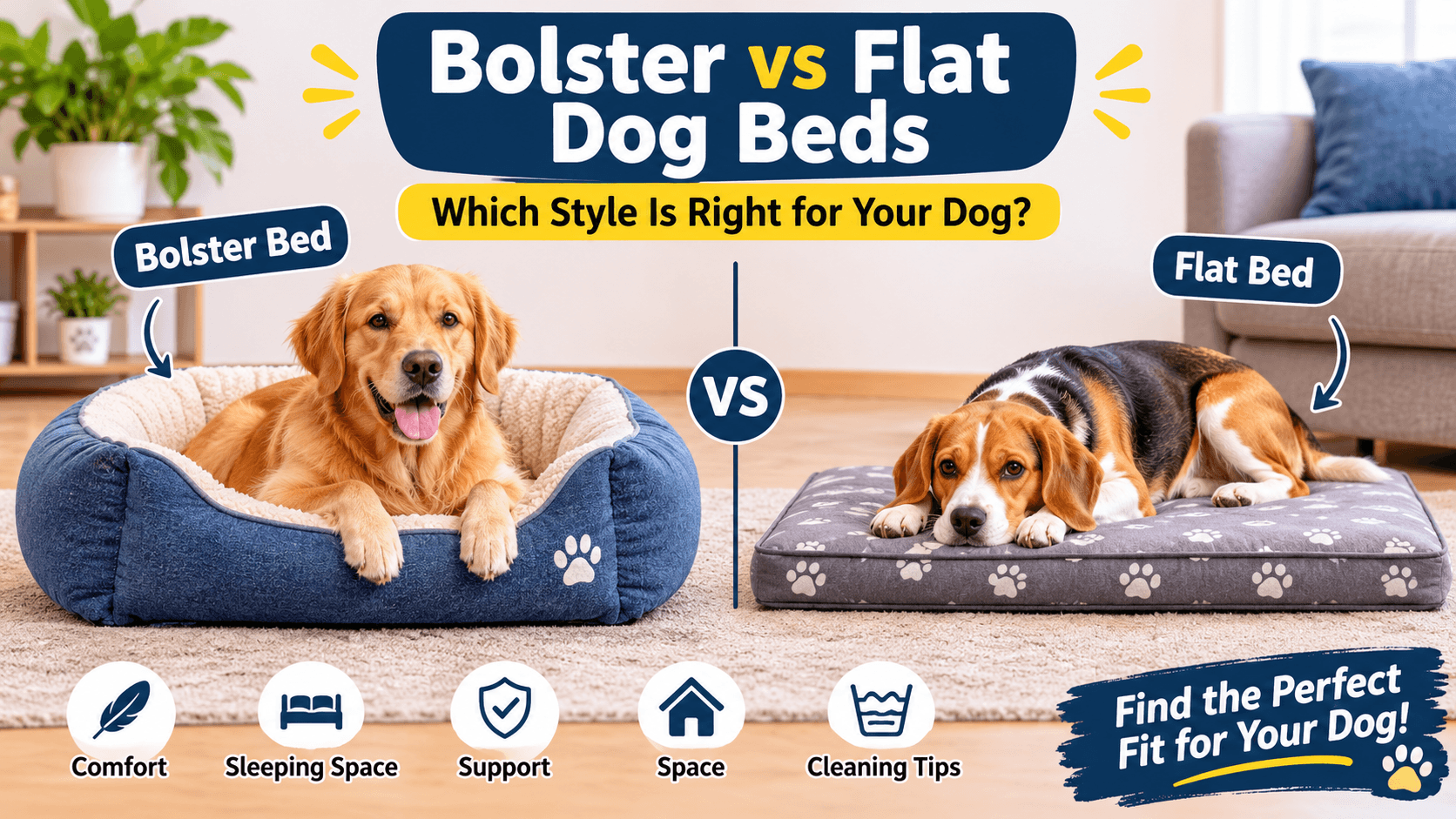
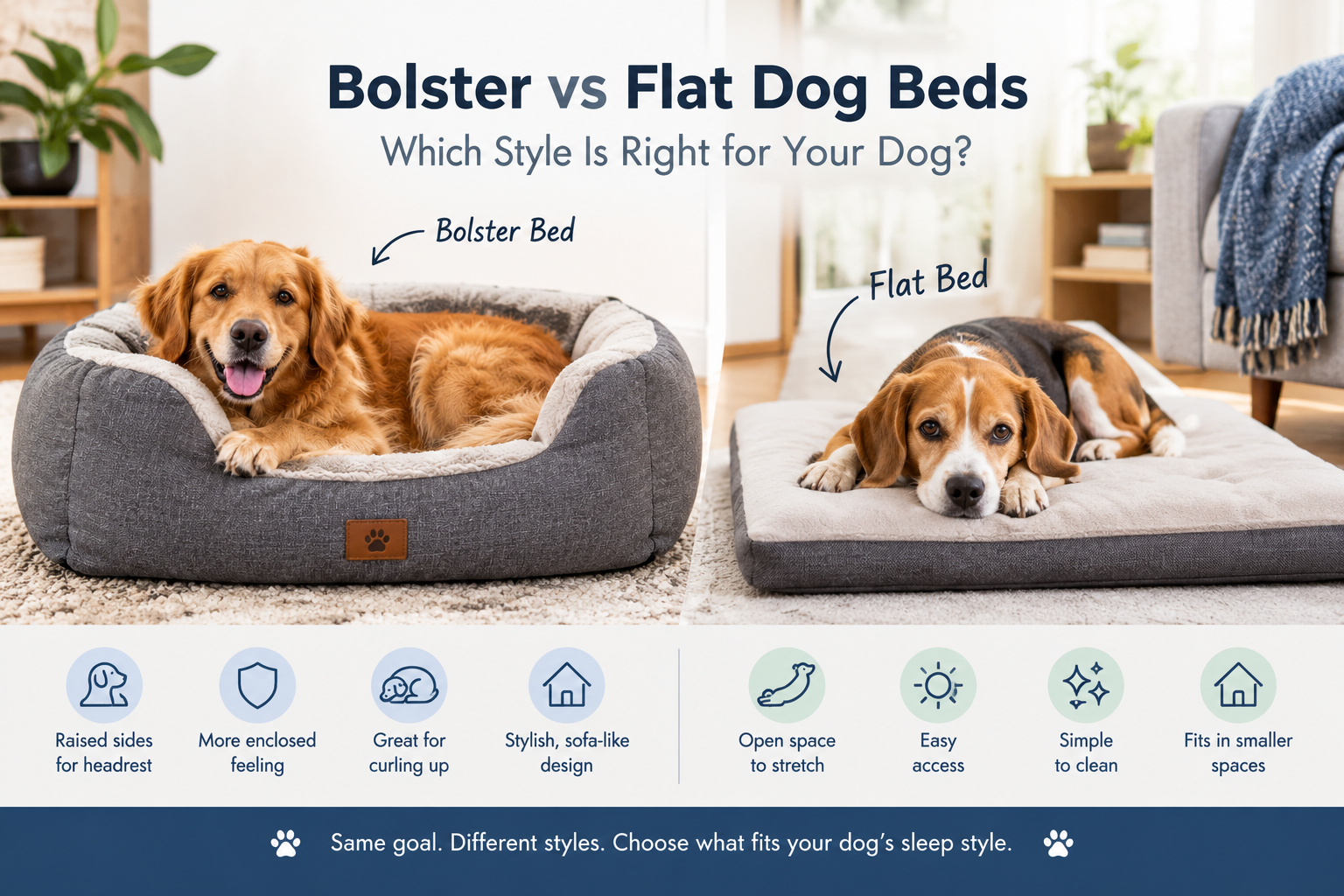
Choosing between bolster vs flat dog beds depends on how your dog sleeps, how much room they need and how easily they can get on and off the bed. A bolster dog bed has raised sides that can provide a headrest and a more enclosed feel, while a flat dog bed offers an open sleeping surface for stretching and changing positions.
Neither style is automatically better for every dog. Some dogs prefer curling up against a raised edge, while others like to stretch out across a flat cushion. Understanding these differences can help you choose a bed that suits your dog's everyday habits.
In this guide, we'll compare the benefits and limitations of both styles, explain what to look for when buying one, and help you decide which dog bed is the better fit for your pet.
What Is a Bolster Dog Bed?
A bolster dog bed has raised, padded edges on one or more sides. Depending on the design, it may resemble a small sofa, with a cushioned center and supportive-looking sides.
Dogs that enjoy resting their heads against furniture or curling up in a corner may appreciate having a raised edge beside them.
Benefits of bolster dog beds
- A built-in headrest: The raised edge gives dogs a place to rest their head if they like sleeping that way.
- A more enclosed feel: Some dogs prefer having a defined sleeping area rather than an open cushion.
- Different sleeping positions: A dog can curl up in the center or lean against a side, depending on the bed's shape.
- A furniture-style design: Sofa-style beds can fit naturally into many living rooms.
When comparing dog bed styles, make sure you choose a bed that gives your pet enough room to stretch and change positions. Our dog bed size guide explains how to measure your dog and compare bed dimensions before buying.
Potential drawbacks
- Raised sides can reduce the usable sleeping area.
- Tall edges may be inconvenient for dogs that have difficulty stepping over them.
- Extra seams and filling may make some designs more difficult to clean.
- A bulky bed may take up more floor space than a simple cushion.
Before choosing a bolster bed, check its interior sleeping dimensions rather than relying only on the outside measurements.
What Is a Flat Dog Bed?
A flat dog bed is a mattress-style cushion without raised sides. It may contain foam, polyester filling or another cushioning material, depending on the design.
Flat dog beds provide an open surface that allows dogs to stretch, turn around and change sleeping positions without being surrounded by padded edges.
Benefits of flat dog beds
- More open sleeping space: The available surface is generally easier to use across its full width.
- Freedom to stretch: Dogs that sleep with their legs extended may prefer an unobstructed cushion.
- Simple access: There are no raised bolsters to step over, although the cushion's overall height still matters.
- Practical placement: Flat beds can fit neatly beside sofas, under desks or in designated sleeping areas.
- Straightforward maintenance: Some flat designs are easier to move, vacuum and wash, depending on their covers and construction.
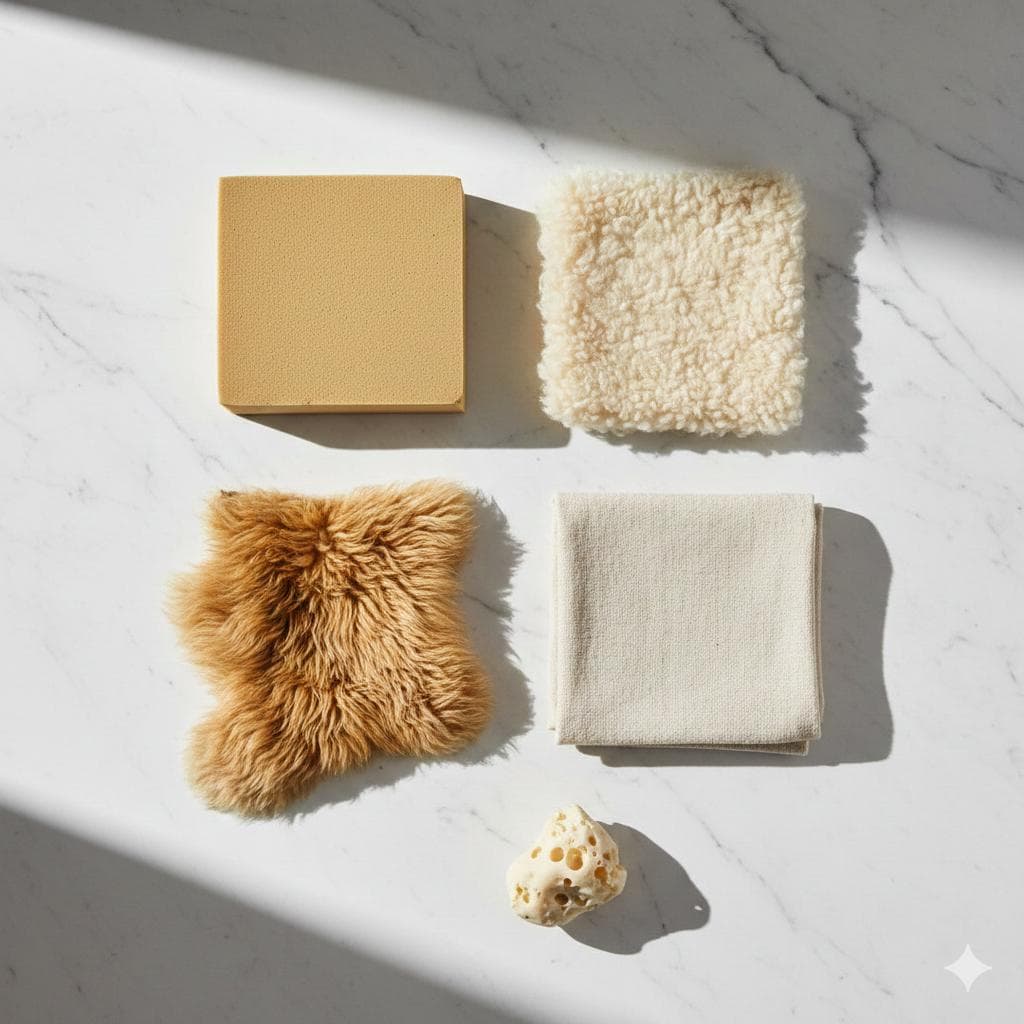
The filling and outer fabric can affect how a dog bed feels, performs and holds its shape. Explore our guide to the best dog bed materials to compare common filling types and fabrics.
Potential drawbacks
- There is no built-in raised edge for dogs that like a headrest.
- Some dogs may prefer the more enclosed feel of a bolster bed.
- A thin or poorly constructed cushion may not provide enough cushioning for a particular dog's needs.
Remember that a flat bed is not necessarily more supportive than a bolster bed. Support depends on the materials, filling, thickness and overall construction.
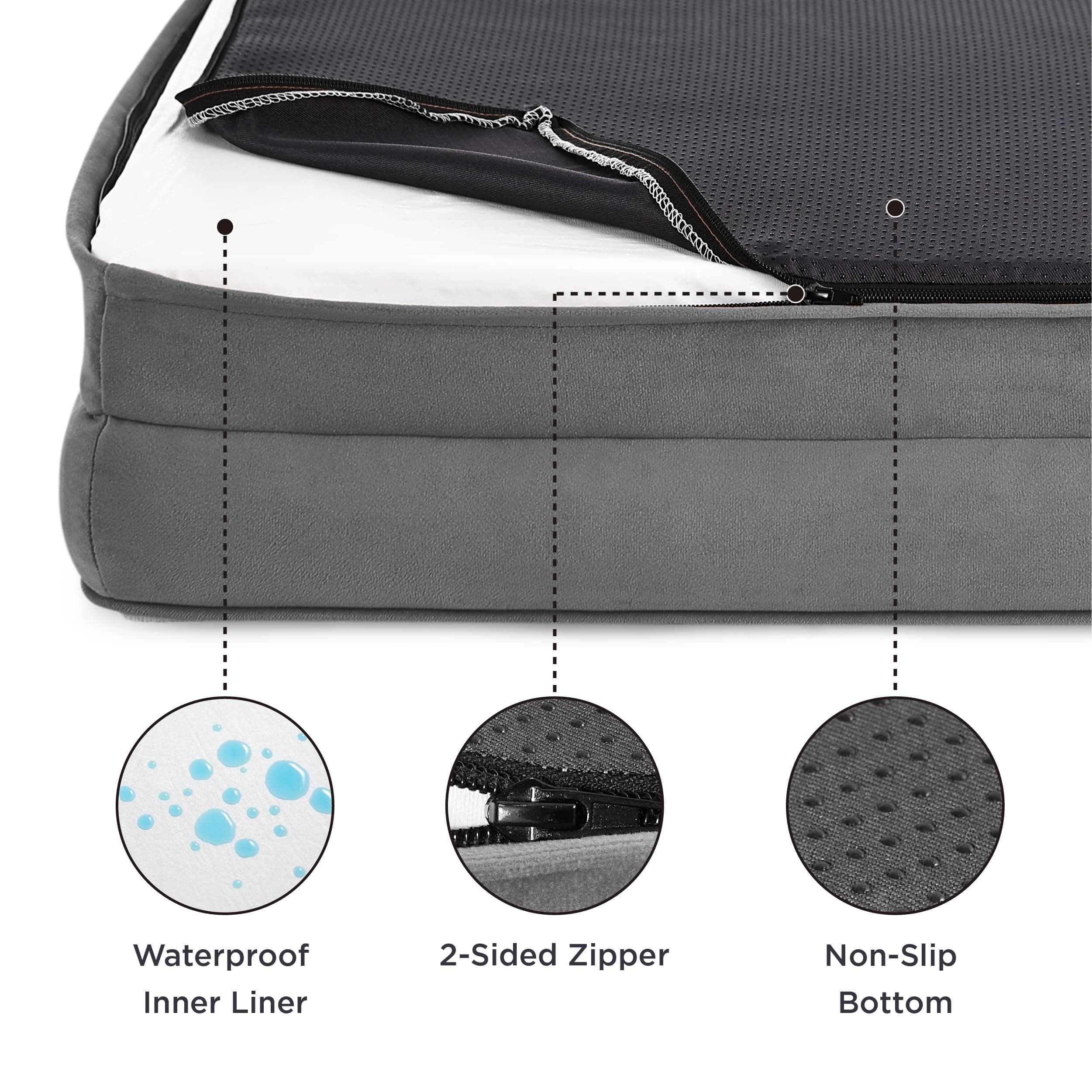
Ease of cleaning is another factor to consider when choosing a dog bed. Read our comparison of washable vs waterproof dog beds to understand how removable covers and protective liners serve different purposes.
Bolster vs Flat Dog Beds: Key Differences
| Feature | Bolster dog bed | Flat dog bed |
|---|---|---|
| Design | Raised sides on some or all edges | Open, cushion-style surface |
| Sleeping style | May suit dogs that curl up or lean | May suit dogs that stretch out |
| Headrest | Built-in raised edge | No built-in raised edge |
| Usable space | Reduced by the raised sides | Generally more open surface area |
| Entry | Depends on side height and openings | Depends mainly on cushion height |
| Cleaning | Depends on cover, seams and filling | Some designs are simpler to clean |
| Floor space | Can be bulky because of the raised edges | Often easier to fit into smaller spaces |
| Best buying check | Interior dimensions and entry height | Surface dimensions and cushioning |
The right choice depends on your dog's habits and the specific design. A low-entry bolster bed, for example, may combine some benefits of both styles.
Which Dog Bed Is Best for Your Dog's Sleeping Position?
Your dog's sleeping habits can help you narrow down the options. Observe how they rest during the day and at night rather than choosing a bed based only on its appearance.
Dogs that curl up
If your dog regularly curls into a compact position, a bolster bed may be worth considering. The raised sides provide an edge to lean against, which some dogs appear to enjoy.
However, make sure the center is large enough for your dog to settle comfortably without being squeezed by the sides.
Dogs that stretch out
Dogs that sleep on their sides with their legs extended may benefit from the open surface of a flat bed.
Check the actual sleeping area and allow enough room for your dog to stretch and change positions. A bolster bed can also work if its interior dimensions are sufficiently large.
Dogs that rest their heads on pillows
Some dogs prefer to rest their heads on a sofa cushion, folded blanket or another raised surface. A bolster bed offers a built-in edge that may suit this preference.
Not every dog needs a raised headrest, so observe what your dog chooses when given different resting surfaces.
Dogs that change positions frequently
Dogs that move around while resting may appreciate an open surface. A flat bed can make it easier to turn and stretch without navigating raised sides.
A large bolster bed with a low or open entrance may also be suitable, provided it offers enough usable space.
Are Bolster or Flat Dog Beds Better for Senior Dogs?
For senior dogs, the most important considerations are comfortable cushioning, adequate sleeping space and easy access.
A flat dog bed may be a practical option if your dog has difficulty stepping over raised edges. However, a low-entry bolster bed may still suit a senior dog that likes resting against a padded side.
When comparing beds, check:
- Entry height: Can your dog get onto the bed without struggling?
- Cushioning: Does the bed provide a comfortable surface for your dog's size and weight?
- Usable dimensions: Is there enough room to lie down and change position?
- Stability: Does the bed stay in place on your flooring?
- Maintenance: Can the cover be removed and cleaned according to its instructions?
No bed shape can treat an underlying joint or mobility condition. If your dog has persistent pain, stiffness or difficulty getting up, consult your veterinarian about appropriate support and care.
Are Bolster Dog Beds Good for Large Dogs?
Yes, large dogs can use bolster beds if the interior sleeping area is sufficiently spacious and the entrance suits their needs.
One common buying mistake is comparing beds using only their external dimensions. A large-looking bolster bed may have a smaller center once the raised sides are accounted for.
Before ordering, check the listed interior measurements, cushion thickness and recommended weight range where available.
For large dogs that stretch out, a flat bed may provide a more practical sleeping area. For dogs that curl up or like resting their heads against a raised edge, a larger bolster bed may be worth comparing.
Which Dog Bed Is Easier to Clean?
Neither shape is always easier to clean. The cover design, filling, seams and washing instructions matter more than the shape alone.
A flat cushion with a removable cover may be simple to vacuum and maintain. A bolster bed may have extra seams and sections that collect fur, but some models also have removable covers.
Before buying, check whether:
- The cover can be removed easily.
- The product has clear washing instructions.
- The inner cushion requires separate care.
- The fabric suits your dog's shedding and activity level.
- Replacement covers are available, if needed.
Always follow the manufacturer's care instructions. A removable cover does not automatically mean that the entire bed is machine washable.
What Should You Check Before Buying a Dog Bed?
Whether you choose a bolster or flat design, use the same basic buying checklist.
1. Measure your dog
Measure your dog while they are lying in their usual sleeping position. Consider both curled-up and stretched-out positions if they regularly switch between them.
Compare those measurements with the bed's usable sleeping surface, not just its outside dimensions.
2. Check the filling and construction
Look at the materials used in the cushion and how the bed is constructed. A comfortable cover alone does not tell you whether the underlying cushion will suit your dog.
Choose cushioning appropriate for your dog's size, weight and sleeping habits.
3. Consider the entrance
For bolster beds, look at the height of the sides and whether there is a lower entrance. For flat beds, consider the height of the cushion itself.
Easy access can matter more than the overall shape for dogs that struggle with movement.
4. Think about your home
Measure the space where the bed will go. A large sofa-style bolster bed may take up more room than expected, while a flat cushion may fit more easily into a smaller sleeping area.
5. Read the care instructions
Check how the cover and inner cushion should be cleaned. If your dog sheds heavily or regularly gets dirty after walks, practical maintenance features may be particularly useful.
6. Compare value, not just price
Compare the dimensions, materials, construction, cover design and return policy before deciding. A higher price does not automatically mean that a bed is more suitable for your dog.
Common Mistakes When Choosing Between Bolster and Flat Beds
Avoid these common buying mistakes:
- Choosing by appearance alone: A stylish bed may not suit your dog's sleeping habits.
- Ignoring interior measurements: Raised sides reduce the usable center of a bolster bed.
- Assuming all dogs prefer bolsters: Some dogs prefer an open sleeping surface.
- Ignoring entry height: Raised edges may be inconvenient for some dogs.
- Assuming flat beds offer less support: Cushion support depends on the materials and construction.
- Overlooking cleaning requirements: Check the care instructions before buying.
- Buying too small: Your dog should have enough room to settle and change positions comfortably.
Frequently Asked Questions
Are bolster beds better than flat dog beds?
Neither style is universally better. Bolster beds may suit dogs that curl up or like resting their heads against a raised edge, while flat beds may suit dogs that stretch out or prefer an open sleeping surface.
What is the difference between a bolster and a pillow dog bed?
A bolster bed has raised, padded sides around some or all of its sleeping area. A pillow dog bed is generally a flatter cushion without built-in raised edges.
Do dogs like beds with raised sides?
Some dogs enjoy leaning against raised sides or resting their heads on them. Others prefer more open space. Observing your dog's usual sleeping position can help you choose.
Are flat dog beds good for dogs that stretch out?
They can be a practical choice because they provide an open surface. Make sure the bed is large enough for your dog to stretch out and change positions comfortably.
Do bolster beds have less sleeping space?
Raised sides generally reduce the usable center compared with the bed's outside dimensions. Check the interior measurements before buying, especially for medium and large dogs.
Are bolster beds suitable for senior dogs?
They can be suitable if the dog can enter and leave comfortably. A low-entry bolster or flat bed may be easier for a senior dog that struggles with raised edges.
Which dog bed style is best for large dogs?
The best style depends on the dog's sleeping habits and the bed's usable dimensions. Large dogs that stretch out may prefer a spacious flat bed, while dogs that curl up may enjoy a suitably sized bolster bed.
Are flat dog beds easier to clean?
Some flat beds are easier to move and clean because they have fewer raised sections. However, removable covers, filling and care instructions are more important than shape alone.
Can a bolster dog bed provide enough support?
It can, depending on the cushion materials, thickness and construction. Raised sides alone do not guarantee better support, so compare the sleeping surface as well as the bed's shape.
How do I choose the right dog bed size?
Measure your dog in their usual sleeping positions and compare those measurements with the bed's usable dimensions. Allow enough room for stretching, turning and settling comfortably.
Final Thoughts
The choice between bolster vs flat dog beds comes down to your dog's sleeping style, available space and ability to access the bed comfortably.
A bolster bed may suit dogs that curl up, lean against edges or enjoy a built-in headrest. A flat dog bed may be a better fit for dogs that stretch out, change positions frequently or prefer an open surface.
Before buying, compare the usable sleeping area, cushioning, entry height and cleaning instructions. The best bed is the one that suits your individual dog's needs rather than the one with the most features.
Observe how your dog sleeps, measure carefully and choose a design that provides enough comfortable space for everyday rest.