
# Senior Dog Beds Canada: How to Choose the Right Bed for an Older Dog
As dogs get older, their sleeping habits and comfort needs can change. Your dog may take longer to settle down, hesitate before stepping onto a bed or prefer a different resting surface than they did a few years ago. Choosing the right senior dog beds Canada pet owners can find means considering more than softness or appearance.
The best bed for an older dog should provide suitable cushioning, enough room to rest naturally, stable placement and easy access. Washability may also become more important as everyday care needs change.
At Zarexon, we believe choosing pet essentials should begin with your dog's individual needs. This guide explains how to compare beds for senior dogs, what to look for in orthopedic-style designs and how to create a comfortable resting area at home.
What Makes a Good Bed for a Senior Dog?
A senior dog bed should suit the way your dog moves, rests and gets up. Some older dogs remain active and comfortable using their usual beds, while others may need a lower entry, a more stable surface or different cushioning.
Before buying a replacement, observe your dog using their current bed.
- Do they climb over raised sides to get in?
- Does the mattress sink considerably under their weight?
- Do they slip when getting on or off?
- Can they stretch out without hanging over the edge?
- Is the cover easy to clean and keep dry?
These observations can help you identify which features deserve priority.
A thick, plush bed is not automatically the best choice. A dog that struggles to get up may find a deep, soft mattress difficult to navigate, while another dog may prefer a more padded surface. The right choice depends on the individual animal.
Which Type of Senior Dog Bed Should You Choose?
Different bed designs offer different benefits. Compare the available features rather than assuming one type is best for every older dog.
| Bed type | May suit | What to consider |
|---|---|---|
| Orthopedic-style foam bed | Owners looking for a more substantial, supportive sleeping surface | Foam construction, compression and mattress height |
| Low-profile mattress | Dogs that find raised edges difficult to navigate | Cushioning, floor grip and ease of access |
| Bolster bed | Dogs that like resting their head against a raised edge | Whether the sides reduce sleeping space or obstruct entry |
| Flat dog mattress | Dogs that stretch out or change sleeping positions frequently | Usable dimensions and suitable cushioning |
| Washable-cover bed | Homes where routine cleaning is a priority | Removal, washing and drying instructions |
| Water-resistant or waterproof bed | Households needing additional moisture protection | Whether the product is water-resistant or fully waterproof |
These are general buying categories. Product construction and your dog's needs matter more than the label alone.
Orthopedic-style beds for older dogs
Orthopedic-style dog beds are marketed around cushioning and support. Many use foam or layered materials, but products can differ significantly in construction and performance.
When comparing orthopedic dog beds for senior dogs, check:
- The type of foam or filling.
- The mattress's stated dimensions and thickness.
- Whether the surface compresses substantially under your dog's weight.
- How easy it is for your dog to get on and off.
- Whether the cover can be removed and cleaned.
- The manufacturer's care instructions and warranty.
The term orthopedic does not guarantee a particular medical benefit. A suitable bed may help provide a comfortable resting surface, but it should not be presented as a treatment for arthritis or another medical condition.
Low-entry beds for older dogs
A bed with a low entry or an open side may be easier for a dog that struggles to step over raised edges. However, lower is not automatically better if the mattress provides unsuitable cushioning or slides across the floor.
Look for a stable bed that allows your dog to get in, turn around, settle down and leave without unnecessary obstacles.
Bolster beds versus flat mattresses
Bolster beds have raised sides that some dogs enjoy leaning against. Flat mattresses provide a more open surface for dogs that like stretching out or changing positions.
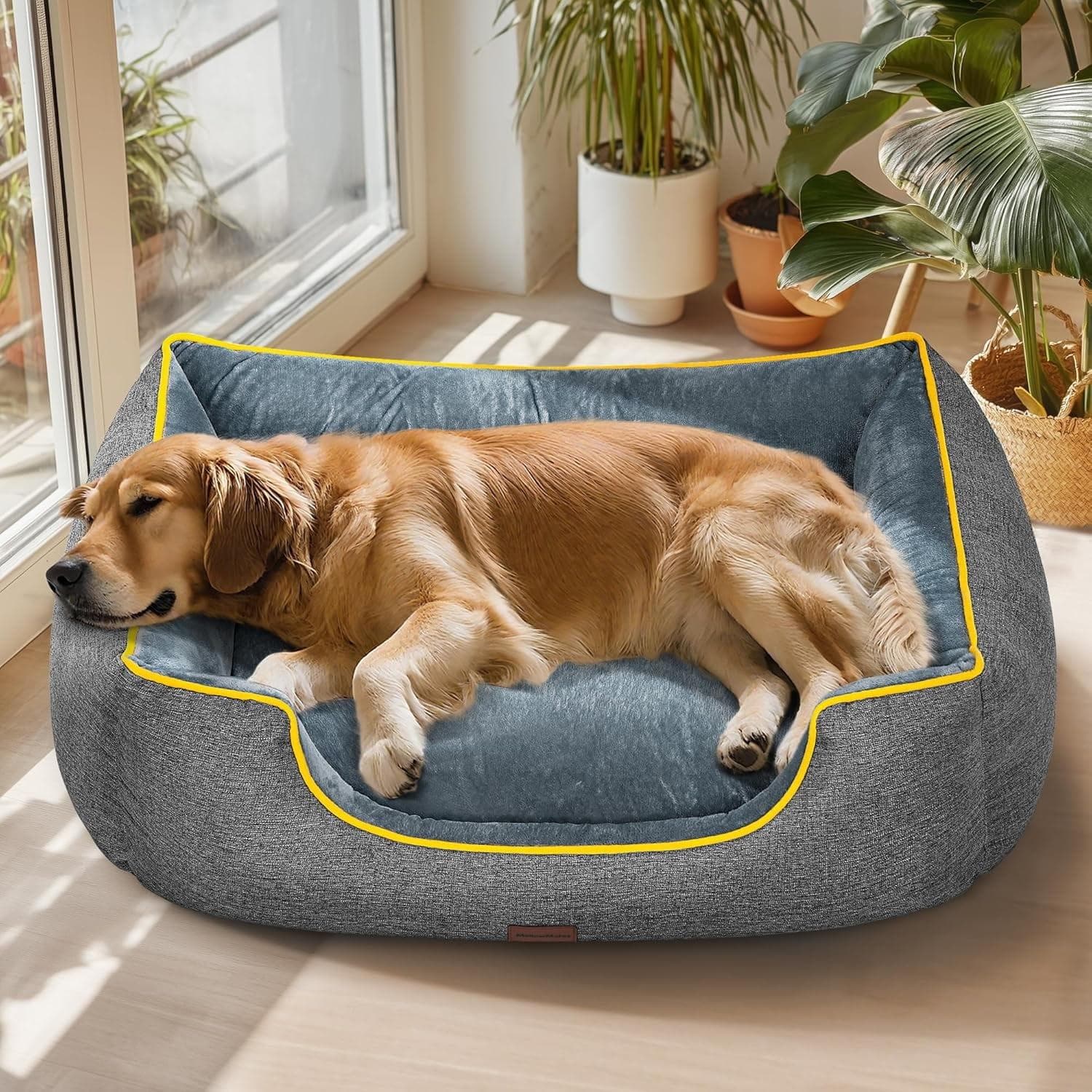
If your dog has difficulty stepping over raised edges, a flat mattress or a bolster design with an accessible opening may be more practical. Check the actual sleeping area because thick bolsters reduce the usable surface.
How to Choose the Right Size for a Senior Dog
A bed should provide enough room for your dog to lie comfortably in their preferred sleeping position. Weight and breed can help narrow down options, but neither tells the whole story.
Step 1: Observe your dog's sleeping position
Notice whether your dog curls up, lies on their side or stretches their legs fully. An older dog that has become stiffer may prefer more room to change position.
Step 2: Measure your dog
Measure your dog's body length and consider the space they occupy when resting naturally. For a dog that stretches out, check both the length and width of the sleeping area.
Step 3: Compare the usable surface
Do not rely only on the external dimensions listed by the manufacturer. Raised sides and thick borders can reduce the space available for your dog to lie down.
Step 4: Consider the entry height
A bed may be spacious and supportive but still unsuitable if your dog finds it difficult to step onto. Check the mattress height and any raised edges.
Step 5: Review the product specifications
Compare the measurements with your dog's needs and the manufacturer's sizing guidance before ordering.
For a more detailed explanation of general measurements, read our Canadian dog bed size guide. That guide focuses on sizing, while this article explains how to consider the changing needs of an older dog.
What Mattress Materials Should You Consider?
The filling affects how a bed feels and responds to your dog's weight. Two beds with similar dimensions can behave differently because they use different materials and constructions.
Memory foam
Memory foam is designed to respond to pressure. The way it feels and performs depends on its formulation, density, thickness and the other materials used in the mattress.
Check the manufacturer's specifications instead of assuming all memory foam beds offer the same support.
High-density foam
High-density foam is used in some mattresses designed to provide a more substantial base. However, density, firmness and durability are not identical properties.
Look for clear information about the foam and consider whether the complete mattress is suitable for your dog's size and mobility.
Layered foam
Some dog beds use multiple foam layers with different characteristics. A layered construction may offer a different feel from a single-layer mattress, but the number of layers alone does not prove that the bed is better.
Compare the complete construction and the product's stated care requirements.
Polyester fibre filling
Fibre-filled beds can offer a soft, flexible resting surface. Depending on the design, the filling may move or become uneven with use.
If you choose this type of bed, inspect it regularly and check whether the cover can be removed for cleaning.
Practical takeaway: Compare the material specifications, mattress construction and ease of access rather than choosing a bed based solely on the words memory foam or orthopedic.
Should a Senior Dog Have a Firm or Soft Bed?
There is no single firmness level that suits every older dog. A bed should provide appropriate cushioning without making it difficult for your dog to change position or get up.
A very soft surface may be difficult for some dogs to move on, while a firm surface with insufficient cushioning may not suit others.
When comparing beds, consider:
- How much the mattress compresses under your dog's weight.
- Whether your dog can get up without excessive effort.
- Whether the surface stays stable on the floor.
- Your dog's usual sleeping position.
- Any advice your veterinarian has given about mobility or comfort.
If your dog begins struggling to stand, repeatedly changes position or avoids a previously comfortable bed, do not assume the mattress is the only cause. Seek veterinary advice about new or persistent mobility changes.
Why a Non-Slip Base Matters
A dog bed that slides across a smooth floor may be inconvenient for an older dog. Hardwood, tile and laminate can be slippery, particularly when a dog is stepping onto or leaving a bed.
Consider the following:
- A base designed to grip the intended floor surface.
- A bed that remains stable when your dog changes position.
- Enough clear space around the sleeping area.
- A suitable non-slip rug or mat beside the bed, where appropriate.
A non-slip base is not a guarantee against falls. Check the floor and the bed regularly to make sure the sleeping area remains stable and free from obstacles.
Are Washable and Waterproof Beds Useful for Senior Dogs?
They can be useful, but washable and waterproof describe different features.
A washable dog bed has components that can be cleaned according to the manufacturer's instructions. A waterproof bed or liner is designed to prevent liquid from passing through the specified protective layer when used as intended.
Before buying, check:
- Is the cover removable?
- Can it be machine-washed?
- Can the mattress itself be cleaned, or does it require spot cleaning?
- Is the protective layer waterproof or only water-resistant?
- How should the cover and filling be dried?
These details matter if the bed collects fur, dirt, dampness or occasional accidents.
For more information, read our guide to dog beds for Canadian winters. It covers seasonal sleeping comfort, while this article focuses on selecting a suitable bed for an older dog throughout the year.
Where Should You Place a Senior Dog's Bed at Home?
Choosing the bed is only part of creating a comfortable resting area. Its location can also affect how easily your dog uses it.
Choose an accessible location
Place the bed somewhere your dog can reach without unnecessary stairs or obstacles. A quiet area near the household's normal activity may be more suitable than an isolated spot, depending on your dog's preferences.
Keep the floor clear
Remove loose objects, clutter and anything that could make approaching the bed difficult. Make sure there is enough room for your dog to turn around and leave comfortably.
Consider the temperature
Canada's indoor temperatures and seasonal conditions vary by region and household. Choose a location that is comfortable for your dog and away from direct heat, cold draughts and other environmental extremes.
Keep the resting area clean and dry
Follow the manufacturer's instructions for cleaning the bed and dry its components thoroughly before use. Regularly inspect the surface for damage and signs of wear.
Keep the setup familiar
Some older dogs may find a consistent sleeping location easier to navigate. Observe where your dog naturally settles and adjust the setup to suit their needs.
How Canadian Seasons Affect Your Bed Choice
Canadian weather varies substantially across the country. A bed that works well in a warm apartment in Vancouver may not feel the same in a home experiencing a colder winter in Winnipeg or Ottawa.
Choose bedding according to your indoor environment and your dog's needs rather than relying on the season alone.
Winter comfort
Consider whether the sleeping area is warm enough and protected from cold draughts. A suitable bed can provide a comfortable indoor resting surface, but bedding alone does not make an unsafe environment safe.
For more detailed seasonal advice, see our dog beds for Canadian winters guide.
Spring and autumn
Wet paws and muddy walks may make easy-clean covers useful. Check the bed regularly and dry it according to the manufacturer's instructions.
Summer comfort
Avoid placing a bed in direct sunlight or an excessively warm area. Consider the room temperature, ventilation and your dog's comfort when choosing a location and mattress material.
Never rely on a dog bed to protect a pet from excessive heat or cold.
Signs That a New Bed May Not Be Enough
A new bed may make a resting area more comfortable, but changes in how your dog sleeps or moves can have other explanations.
Contact your veterinarian if you notice new or persistent signs such as:
- Difficulty standing up or lying down.
- Limping or reluctance to move.
- Repeatedly avoiding a previously comfortable bed.
- Restlessness that appears unusual for your dog.
- Whining or signs of discomfort when changing position.
- A sudden change in sleeping habits or daily activity.
Do not assume these signs are simply part of getting older. A veterinarian can assess your dog and advise whether changes to bedding, the home environment or other care are appropriate.
Common Mistakes When Choosing Senior Dog Beds
Choosing softness over accessibility
A deep, plush bed may look comfortable but can be difficult for some dogs to enter or leave. Consider the whole design, including mattress height and stability.
Buying based only on the orthopedic label
The label does not guarantee a particular construction or medical benefit. Compare the actual materials, dimensions and care instructions.
Ignoring the usable sleeping area
External dimensions can be misleading when a bed has thick raised sides. Check the area where your dog will actually lie down.
Forgetting about floor grip
A bed that moves when your dog gets on or off may be inconvenient. Assess the base and the floor surface together.
Assuming every older dog needs the same bed
Dogs differ in size, sleeping habits, mobility and preferences. Choose according to your individual dog's needs rather than age alone.
Treating a bed as a substitute for veterinary care
Bedding can be part of a comfortable home setup, but it does not diagnose or treat an underlying medical condition. Seek advice if your dog develops persistent discomfort or mobility changes.
Frequently Asked Questions About Senior Dog Beds in Canada
What is the best bed for a senior dog?
The best bed is one that suits your dog's size, sleeping position, mobility and comfort needs. Compare mattress support, entry height, stability and cleaning requirements rather than relying on one product label.
Are orthopedic dog beds good for older dogs?
An orthopedic-style bed may be worth considering if you want a more substantial sleeping surface. However, products differ in construction, and the term does not guarantee a medical benefit. Choose according to your dog's needs and ask your veterinarian about specific health concerns.
Should a senior dog use a firm or soft bed?
Neither firmness level is right for every dog. Consider how the mattress compresses, whether your dog can move comfortably and whether the surface suits their sleeping habits.
Is a low-entry bed better for an older dog?
It may be helpful for a dog that struggles to step over raised edges. However, entry height, cushioning and stability should all be considered together.
How do I choose the right size bed for a senior dog?
Measure your dog and compare the measurements with the usable sleeping surface. Consider how your dog lies down, whether they stretch out and whether raised sides reduce the available space.
Are washable dog beds worth it for senior dogs?
A removable, washable cover can make routine cleaning easier. Check the care label to confirm how the cover and mattress should be cleaned and dried.
Should I buy a waterproof bed for an older dog?
A waterproof liner may be useful in some households, particularly when moisture protection is a priority. Check whether the product is waterproof or water-resistant and whether it is easy to clean.
Can a new dog bed help a dog with arthritis?
A suitable bed may provide a comfortable resting surface, but it should not be presented as a treatment for arthritis. If your dog has joint pain or mobility changes, consult your veterinarian about appropriate care.
Where should an older dog sleep at night?
Choose a comfortable, accessible area that suits your dog's routine and mobility. Avoid unnecessary obstacles and make sure the environment is appropriate for the temperature and your dog's needs.
When should I replace a senior dog's bed?
Replace it when it becomes damaged, difficult to clean, unstable or no longer suitable for your dog's needs. Inspect it regularly rather than relying on a fixed replacement schedule.
Final Thoughts: Choosing the Right Senior Dog Bed
The right senior dog bed should provide suitable cushioning, enough room to rest naturally, stable placement and easy access. Washability and appropriate materials can also make everyday care more manageable.
Before buying, observe how your dog uses their current bed, compare the usable dimensions and check the product's construction. Consider your dog's mobility and the environment where the bed will be placed.
At Zarexon, our aim is to help Canadian pet owners make informed choices through practical pet-care guides. Use the checks in this article to compare bedding options and create a resting area that suits your dog's individual needs.